Water Leaks at Water's Edge: When a Neighbor's Leak Reaches a Lake Dallas Unit
Water's Edge is a lakefront, townhome style mid rise condominium community on the Lewisville Lake shoreline in Lake Dallas.
Key takeaways
- In a mid rise condo, a leak in one unit can pass through ceilings, floors and shared walls to the units around it.
- A ceiling stain in a lower unit often traces to an upstairs appliance, supply pipe or fixture, and not to the roof.
- Shut off water in the home if it is the source, and report a neighbor leak to the neighbor and the property manager quickly.
- Drying follows the moisture through framed and shared walls, so readings matter more than what the surface shows.
- Document the damage in the home and in common walls before anything is repaired.
Why condo leaks travel
In a house, a leak mostly stays in one place. In a mid rise condominium, units sit above, below and beside each other.
Water that gets past the floor of one unit finds the ceiling of the next, and the shared walls between neighbors give it a path sideways too.
The path of least resistance
Water runs downhill and along framing. It follows pipe chases, gaps around plumbing, light fixtures and the seams of the drywall.
A stain that shows up in the middle of a ceiling may have started several feet away.
Who owns what
Condo ownership can split between the unit owner and the association. Who pays depends on the governing documents and the policies.
The restoration team does not decide that. It dries the water and documents the damage so the parties can sort it out.
Common sources in a lakefront condo
Lake Cities Municipal Utility Authority, which serves Lake Dallas, lists unknown leaks and running toilets among the common reasons for a high water bill. Those same quiet leaks can soak a ceiling below.
These are the sources the restoration team checks first:
- A washer hose or dishwasher supply that leaks slowly under an upstairs unit.
- A refrigerator ice maker supply or a drip from a water heater.
- A toilet or tub overflow that runs into the floor.
- A leaking shower pan or a failed seal around a tub.
- An air conditioner condensate drain that overflows in summer, since Lake Dallas has hot, humid summers.
What to do in the first minutes
Speed matters in a shared building, because water keeps moving until someone closes a valve.
Here is a workable order for a lower unit owner whose ceiling is dripping:
- Knock on the unit above and ask whether water is running, and ask them to shut off the supply.
- Notify the property manager or association right away so the building shutoff can be used if needed.
- Put a bucket under the drip and move furniture and electronics out of the way.
- Turn off power to the room if water is near fixtures or outlets.
- Take photos and video of the ceiling, the walls and any damaged belongings.
How drying works in shared walls
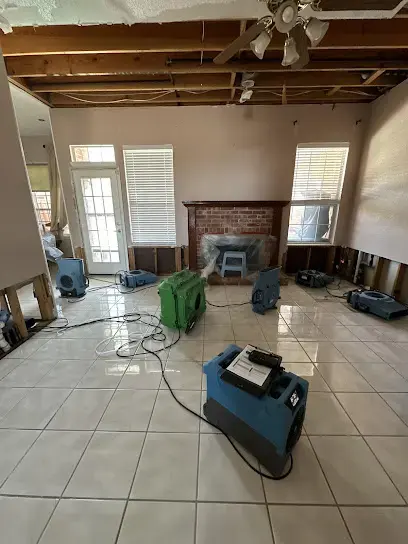
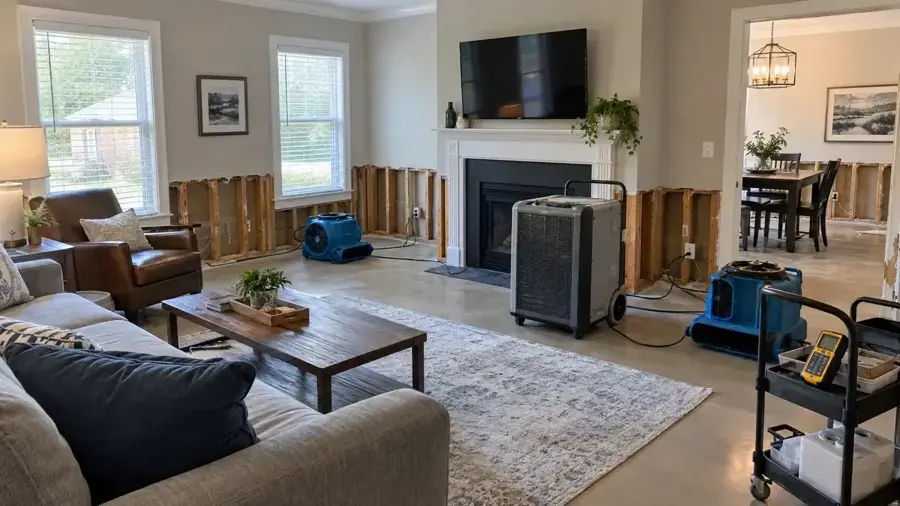
Because water moves through framing, drying follows the moisture and not the stain. The restoration team uses moisture meters and thermal imaging to map where the water went.
Mid rise condos have more wall and ceiling cavities than a one story home, so there are more places for moisture to hide.
Ceilings
A small stain may be dried in place. A sagging or soft section is cut out so the cavity can dry.
The ceiling leak water damage page covers how that decision is made.
Walls and floors
Wet insulation, baseboards and bottom plates are checked, since water wicks up from the floor. Air movers and dehumidifiers run until readings reach a normal range.
See structural drying in Lake Dallas for the full process.
When the leak is an appliance
Appliance leaks are among the most common condo claims. They run slowly, and often nobody notices until the unit below calls.
The appliance leak water damage page covers washers, dishwashers and ice makers in detail.
A tenant or owner who finds the source should shut off the supply to the appliance, not just unplug it.
- Look behind and under the appliance for damp flooring.
- Check the shutoff valve and hose for crusting or drips.
- Run a hand along the cabinet base for swelling.
A look at housing in Lake Dallas
The 2020 Census counted 2,923 housing units in Lake Dallas, with 5.4 percent vacant. About 69.2 percent are owner occupied.
Water's Edge is one lakefront community among those homes, and its mid rise design puts units above and beside each other. That shared structure is what makes a leak a neighbor issue.
- Owners should know where the unit's shutoff valve is.
- Tenants should know who to call at the property office.
- Everyone should know where the building's main shutoff is, if one exists.
Insurance and the association
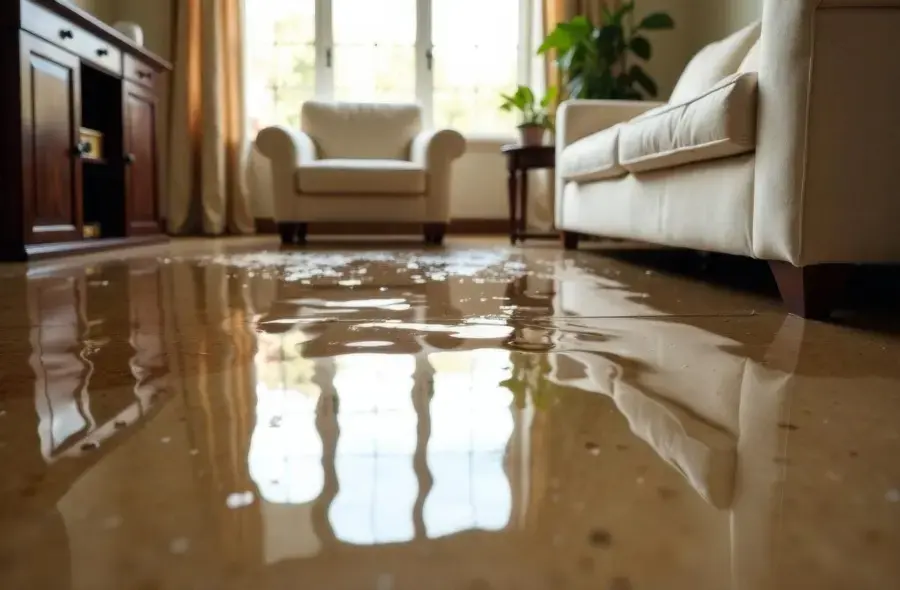
Condo losses often involve more than one insurance policy. The unit owner, the association and sometimes the neighbor above each have a role.
The restoration team supports that process with a clear record: moisture readings, photos and a list of what was dried or removed.
A homeowner should call the insurer early and ask what the association's master policy covers.
- Ask what the policy covers inside the walls.
- Ask whether the neighbor's policy has a liability part.
- Keep every written notice from the association.
Signs of a hidden leak in a shared building
A leak does not have to drip to be a leak. In a shared building, the first sign may be something small that a resident dismisses.
LCMUA lists unknown leaks and running toilets among the common causes of a high water bill, so a bill that climbs without a reason is worth chasing.
- Paint bubbling on a wall that shares a space with a neighbor.
- A soft spot in the floor near a tub, a washer or a kitchen sink.
- A musty smell in a closet that backs onto a bathroom.
- Water stains that return after being painted over.
Keeping records
Good records make claims easier. Write down when the leak was found, who was told and what was done.
Keep receipts, photos and any written notes from the association. The Lake Dallas hub lists every water service for the city.
Questions
What is Water's Edge in Lake Dallas?
It is a lakefront, townhome style mid rise condominium community on the Lewisville Lake shoreline.
Can a leak in one condo damage another?
Yes. Water passes through ceilings, floors and shared walls, so a leak in one unit can wet the units below and beside it.
Who should be told first about a neighbor leak?
The neighbor, so water can be shut off, and the property manager or association, so the building can respond and records are kept.
Does the restoration team decide who pays?
No. The restoration team extracts and dries water and documents the damage. Responsibility depends on the condo documents and insurance.
Why do walls need drying if only the ceiling is stained?
Water travels through framing, so it can sit in a wall or a floor cavity long after the stain on the ceiling looks small.
What does a condo owner need from the restoration team for a claim?
A written record: photos, moisture readings, a description of what was dried or removed and the dates of each visit.
What if the stain comes back after painting?
A returning stain usually means the source is still active or the cavity never dried. Moisture readings show whether water is still in the wall or ceiling.