Structural Drying in Lake Dallas, TX
Water moves through framing, subfloors and shared walls long after the visible puddle is gone. In Lake Dallas, from houses to the mid-rise condominiums at Water's Edge, the drying team follows the moisture with meters and removes it until readings meet the IICRC S500 goal.
(888) 527-9134Walls still damp? Call for structural drying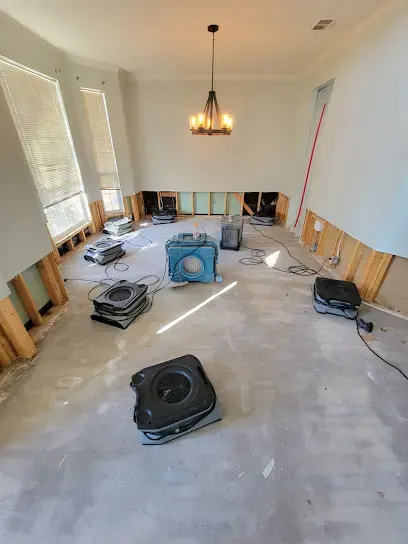
What to do first about structural drying in Lake Dallas
- Stop new waterClose the valve or main, or have the roof covered, so the structure stops taking on moisture.
- Open the roomPull rugs, wet pad and loose items, and keep doors between wet and dry rooms closed.
- Leave the equipment onOnce drying gear is running, keep it plugged in; switching it off to quiet the room stalls the drying.
- Keep the log goingPhotograph readings or sign off on daily visits so the file shows each day of the drying.
What does structural drying cost in Lake Dallas, TX?
Structural drying in Lake Dallas follows the Little Elm drying ranges: the water class, how many rooms are wet and how many days equipment must run. Demolition and rebuild work are separate from the drying itself. Equipment days drive most of the price.
One room, Class 1 or 2
- Air movers and a dehumidifier
- Three to five days
- Daily readings
Several rooms or dense materials
- More equipment
- Longer run time
- Mats on wood or concrete
Whole-floor or Class 4 loss
- Desiccant dehumidifiers
- Containment
- Extended monitoring
These are typical ranges, never a quote. The water category, the square footage, the material class and how fast drying started set the real number. For a planning range on your own rooms, try the water damage cost calculator.
How structural drying is handled in Lake Dallas
- 1
Map the moisture
The tech charts wet walls, floors and ceilings with pinless meters and a thermal camera so equipment goes where the water is.
- 2
Choose the equipment
Air movers and LGR dehumidifiers are sized to each room's evaporation load, and desiccants are added for dense materials.
- 3
Run and adjust
Each day the crew rechecks readings, moves air movers and removes anything that stays wet, such as insulation or soaked trim.
- 4
Prove it dry
Equipment leaves once wet materials match a dry reference in the same building, and the daily log goes into the claim file.
What the IICRC S500 drying goal means
IICRC S500 is the industry standard for water damage restoration. It sets how water is classified and how drying is verified. The goal is a structure that reads dry when compared with an unaffected reference spot, not a fixed number of days.
Class matters because it sets how much equipment is needed. A small wet area in low-porosity materials needs less than water that has soaked into framing, subfloors and shared walls. The class is set by the first moisture map and revisited as readings change.
- Class 1: a small area with low-porosity materials
- Class 2: carpet and wood framing wet
- Class 3: water falling from above
- Class 4: dense materials like concrete
Lake Dallas buildings that change the plan
Mid-rise condominiums at Water's Edge share walls and floors, so moisture can travel into neighboring units and the plan has to follow it. Houses and lakeside units alike are dried by following readings, as covered in water extraction and hardwood floor water damage.
Structural Drying across Lake Dallas and nearby towns
Structural drying covers Lake Dallas and ZIP 75065, including the Water's Edge condominiums, houses throughout town, Main Street storefronts and the Downtown District, with Little Elm and the other Lewisville Lake towns.
The same service in nearby towns: Structural Drying in Lewisville, Structural Drying in The Colony, Structural Drying in Prosper.
Related water damage pages for Lake Dallas
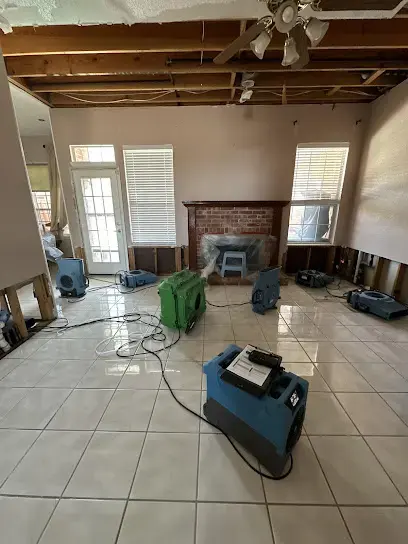 Water damage restoration in Lake DallasThe Lake Dallas page: local risks, ZIP codes and every service.Structural Drying in Little ElmThe main Little Elm page for this service.
 Water Extraction in Lake DallasStanding water pumped out first, whether a fixture failed, a main broke or lake water came in.
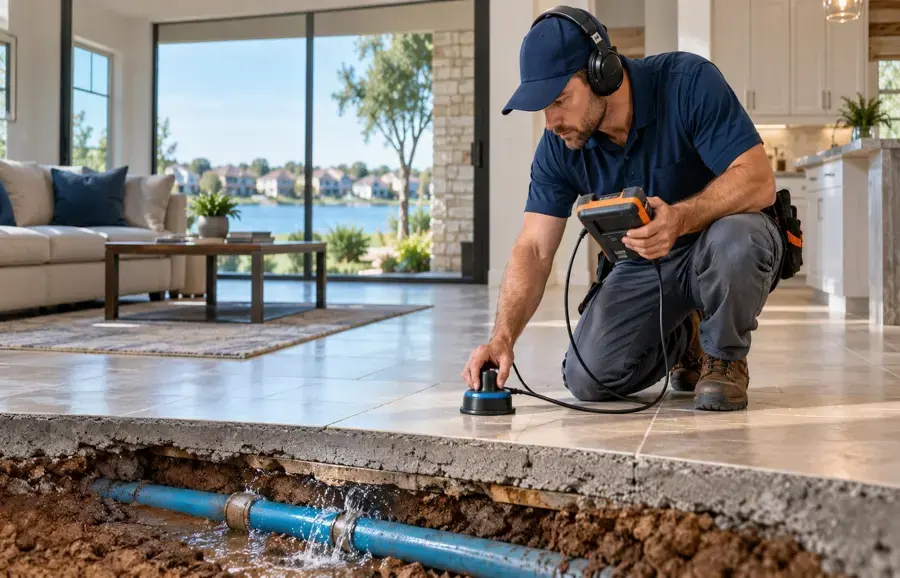 Slab Leak Water Damage in Lake DallasHidden pipe leaks under concrete floors, found by a plumber, then the wet flooring and walls dried.
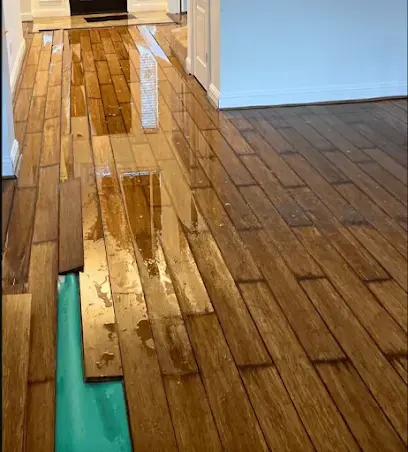 Hardwood Floor Water Damage in Lake DallasCupped or buckled boards in houses and condos, dried with mats before they are written off.
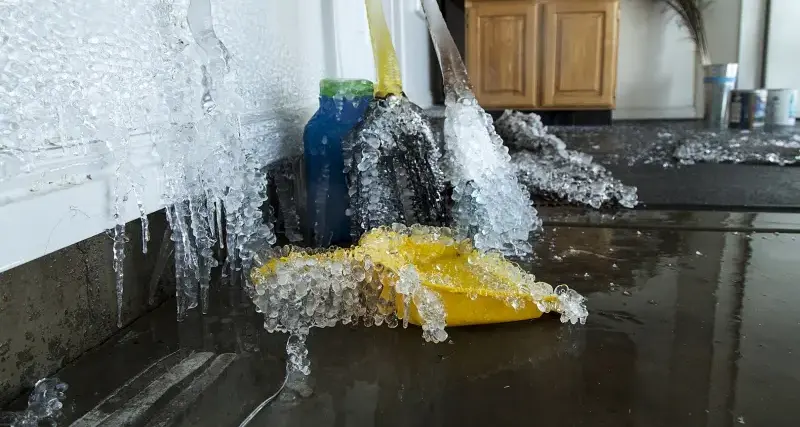 Frozen Pipe Burst Cleanup in Lake DallasPipes split in a freeze like Winter Storm Uri, then the thawed water pulled out and the wall dried.
Structural Drying questions in Lake Dallas, TX
How do crews know when the structure is dry?
They compare readings on wet materials with readings from an unaffected spot in the same building. Equipment comes out only when the two match, not on a set date.
Why does drying take several days?
Water that soaks into framing, drywall and subfloors leaves slowly. Air movers evaporate it and dehumidifiers collect it, and the process continues until readings match the dry reference.
Is it normal for the equipment to be loud?
Yes. Air movers and dehumidifiers run around the clock to do their work, and stopping them early only lengthens the job. The noise ends when the readings meet the goal.
Do shared walls change how drying works?
They can. In a condominium or townhome, moisture can pass into the next unit, so readings are taken in neighboring spaces as well, with the owner's permission.
Does insurance cover structural drying?
Drying after a sudden covered loss is often included, and adjusters look for the moisture map, daily logs and photos. Coverage depends on your policy, so it is worth checking with your own insurer.
Can the drywall be left in place?
Often, if it is clean water and drying starts quickly. Drywall that sags, crumbles or stays wet in the readings is cut out so the framing behind it can dry.
Need it dried right in Lake Dallas? Call now.
Crews bring meters, air movers and LGR dehumidifiers to Lake Dallas every day of the year, nights included, and keep drying until readings meet the IICRC S500 goal.