Sewage Backup in Lake Dallas and The Colony: What the Drains and Lift Stations Tell Homeowners
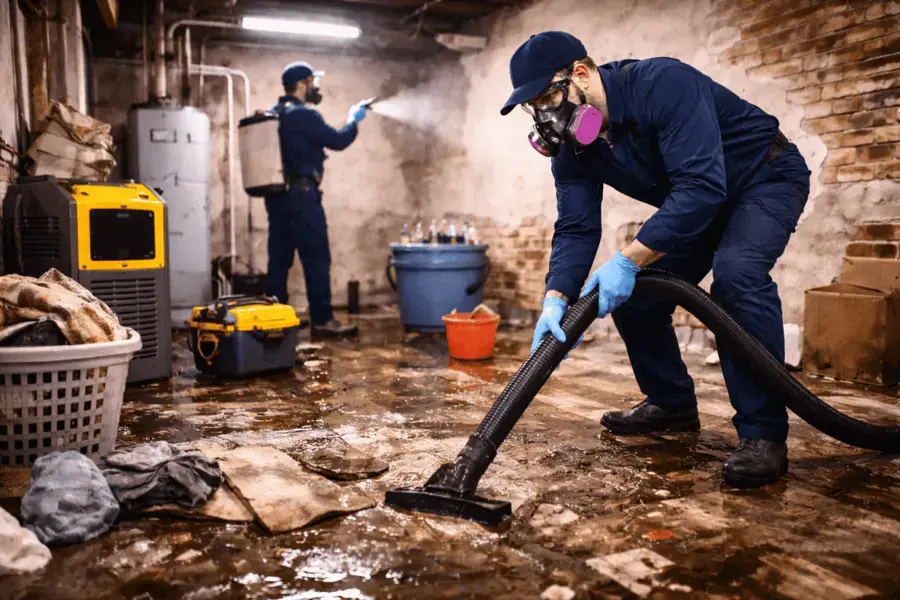
A sewage backup is the one water problem nobody should handle alone, because the water in it is contaminated from the first minute.
Key takeaways
- Lake Cities Municipal Utility Authority, which serves Lake Dallas, runs 22 lift stations with 44 pumps and 625 manholes.
- The utility says its system is designed for water, toilet paper and bodily fluids, and that anything else can block flow and cause backups.
- The City of The Colony runs the Stewart Creek Wastewater Treatment Plant and relies on lift stations to move sewage there.
- Sewage water is contaminated, so porous materials it touches are removed, and the area is cleaned and disinfected.
- This post does not say who owns the sewer pipe on a given property, because the sources do not say.
How the sewer systems in the two cities work
Lake Dallas and The Colony both sit on Lewisville Lake, and both rely on pump stations to move wastewater. A backup can start inside the house or somewhere out in the system.
Knowing a little about how the systems work helps a homeowner describe the problem to the right person.
Lake Dallas and LCMUA
Lake Cities Municipal Utility Authority, called LCMUA, provides water and wastewater service to Lake Dallas, Hickory Creek and Shady Shores. Its wastewater system has 22 lift stations with 44 pumps and 625 manholes.
Upper Trinity Regional Water District operates the Lakeview Water Reclamation Plant in Lake Dallas. LCMUA also keeps an after hours on call technician for emergency water main breaks, leaks and wastewater backups.
The Colony and Stewart Creek
The City of The Colony owns and operates the Stewart Creek Wastewater Treatment Plant, which was built in the late 1980s. It averages about 3.75 million gallons per day and is rated for 4.5 million.
The plant discharges treated water into Lewisville Lake and reuses some at Stonebriar Golf Course. Lift stations around the city move sewage to the plant.
What causes a backup
LCMUA says its wastewater system is designed to handle water, toilet paper and bodily fluids. Anything else can block flow and cause backups.
LCMUA also says repairs and patches have been made on many older segments of its system, and that full replacement will eventually be needed as pipes deteriorate.
- Wipes, paper towels and hygiene products that do not break down.
- Grease and cooking oil that cool and harden in a drain.
- Roots or damage inside a pipe on private property.
- Heavy rain and storm water that overload the system.
- A pump station problem that backs sewage toward low drains.
Early warning signs of a backup
A backup usually announces itself in small ways before sewage reaches the floor. Catching those signs early can save carpet and drywall.
These are the signs the restoration team asks about first:
- Drains that gurgle or drain slowly in more than one fixture.
- A toilet that bubbles when the washer or a tub drains.
- Sewage smell near a floor drain, shower or laundry area.
- Water that rises in a tub or shower when a toilet is flushed.
Heavy rain and the lift stations
Storm water can load the system beyond what it was meant to carry. The Colony relies on lift stations around the city to move sewage to Stewart Creek, and LCMUA relies on 22 of its own.
When pumps or pipes cannot keep pace, the lowest drain in a connected house is the first place a backup shows. Any low point, such as a floor drain or a ground level shower, can be affected.
What to do when sewage appears
The first step is protecting people. Sewage carries bacteria and viruses, and contact with skin, surfaces and food is a health risk.
A sensible order for a homeowner in either city:
- Keep children and pets out of the area, and stay out of standing water.
- Stop using water, including toilets, sinks, washers and showers, so nothing else enters the drain.
- Turn off power to the area if water is near outlets, but only from a dry spot.
- Call the utility if the problem may be in the public system. LCMUA has an after hours technician, and The Colony runs its own wastewater system.
- Call the restoration team to start containment and cleanup, and a plumber to clear the cause.
How the cleanup treats contaminated water
Sewage is treated as the most contaminated kind of water. The restoration team starts with containment so the problem does not spread to clean rooms.
Standing sewage is extracted, and porous materials that soaked are removed instead of dried.
What gets removed
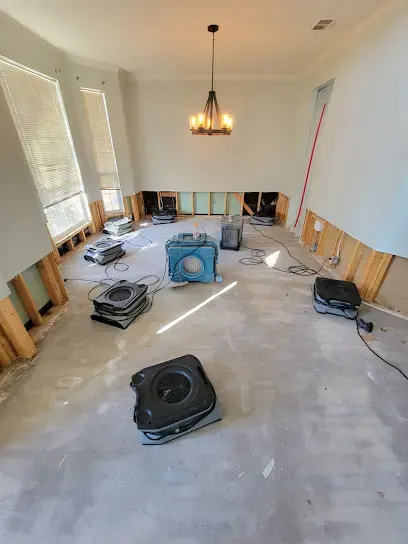
Carpet and pad, soaked drywall, insulation and some cabinetry cannot be made safe once they absorb sewage.
The carpet water damage page explains why carpet that sat in contaminated water is usually removed.
Cleaning and disinfecting
Hard surfaces are scrubbed and treated with an antimicrobial. Then air movers and dehumidifiers dry the area.
The sewage backup cleanup in Lake Dallas and sewage backup cleanup in The Colony pages cover the full process.
Who handles what
Three different people may be involved: the utility, a plumber and the restoration team. Each has a separate job.
The utility checks whether the problem is in the public system. A plumber clears or repairs the cause.
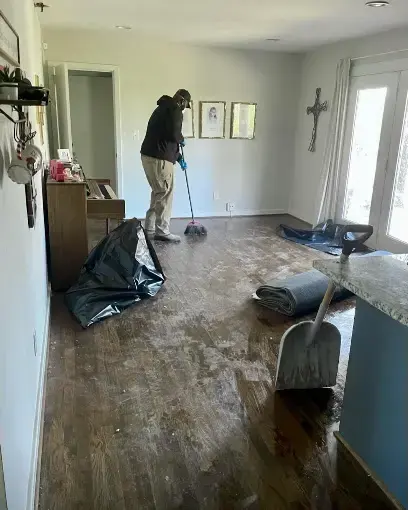
The restoration team handles the damage.
The sources do not say who owns the sewer pipe that runs from a home to the main. A homeowner should ask the utility and the plumber early, and should not assume the city or the utility repairs private plumbing.
Keeping the problem from coming back
Once the cleanup is done, a few habits lower the odds of a repeat. They follow directly from what the utility asks of customers.
- Put only water, toilet paper and bodily fluids down the toilet.
- Throw wipes, paper towels and hygiene products in the trash.
- Pour cooled grease into a can, not down the sink.
- Ask a plumber to inspect a drain that has backed up more than once.
After the cleanup
Once the area is dry, the restoration team documents the work for the insurer. A homeowner should ask whether sewage backup is covered, since many policies treat it as a separate item.
The Lake Dallas hub and the The Colony hub list every service for each city.
Questions
What does LCMUA say should go down a drain?
LCMUA says its wastewater system is designed to handle water, toilet paper and bodily fluids. Anything else can block flow and cause backups.
Is there an after hours number for a sewer backup in Lake Dallas?
LCMUA has an after hours on call technician for emergency water main breaks, leaks and wastewater backups. Customers should use the utility's published contact.
Why is sewage water so serious?
It is contaminated, so porous materials that touch it are removed and the area is cleaned and disinfected.
Can the carpet be saved after sewage?
In most cases, no. Carpet and pad that absorbed sewage are removed because they cannot be made safe by drying alone.
Who owns the sewer pipe on private property?
The local sources do not say. A homeowner should ask the utility and a plumber before assuming who is responsible.
Does heavy rain cause sewage backups?
It can. Storm water can overload pipes and pumps, and the lowest drain in a house is usually where a backup shows first.