Slab Leaks in Little Elm: Clay Soil, Wet Floors and Warm Spots
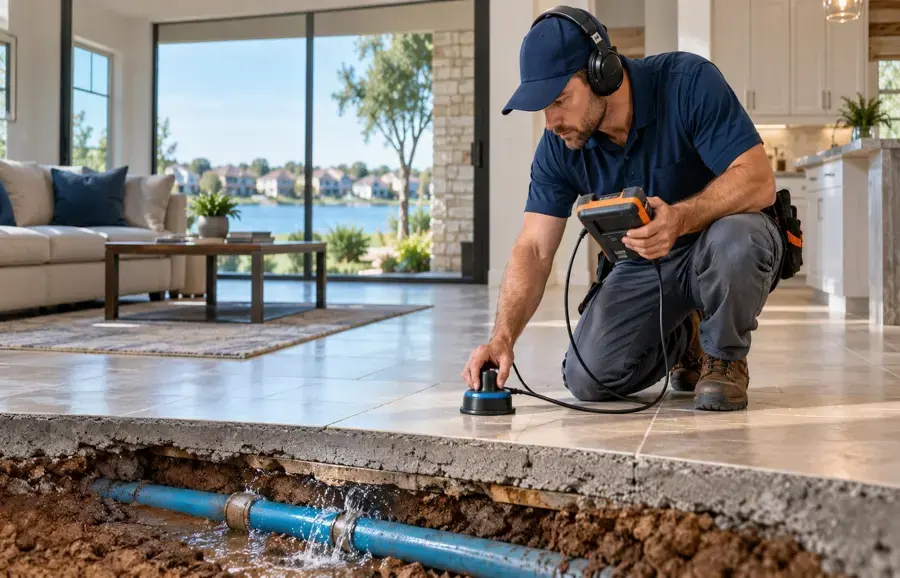
Most Little Elm homes sit directly on a concrete slab, so a leaking pipe underneath does not drip anywhere a homeowner can see.
Key takeaways
- A slab leak is a pressurized supply pipe leaking under or inside the concrete floor, so the first signs show up on the floor above.
- Warm spots on tile, damp carpet edges, a musty smell and a water meter that keeps moving with every fixture off are the classic signs.
- Little Elm houses went up mostly in the late 1990s, 2000s and 2010s on slabs, with supply pipes run through the slab and the attic.
- Denton County clay swells after rain and shrinks in drought, and that movement is one reason pipes under a slab get stressed.
- Shut off the water at the main valve first, then call for drying, because a plumber fixes the pipe and the restoration team dries what it soaked.
Why a slab leak hides in Little Elm houses
Little Elm grew fast, and most of its homes were built in the late 1990s, 2000s and 2010s. The common pattern is slab on grade construction: a concrete floor poured on the ground, with the house framed on top.
Water supply pipes run through the slab and through the attic, and the air handler and often the water heater sit up in the attic or in the garage.
When a supply pipe under the slab starts to leak, the water stays under pressure. It looks for the easiest way out, which may be up through a crack, along the edge of the slab, or sideways under the flooring.
A leak under the floor, not in it
A faucet drip or a hose leak is easy to spot and easy to stop. A slab leak is different because the pipe is buried and the water can run for weeks before a stain appears.
By then the flooring, the baseboards and the bottom of the drywall have often absorbed a lot of moisture.
Where the soil comes in
Slabs in Little Elm sit on expansive Denton County clay. The clay swells after rain and shrinks in drought, and the slab moves a little with it.
That seasonal movement does not break every pipe, but it adds stress to buried fittings and joints, and it is one reason the town sees slab leaks.
Signs a slab leak is already wetting the house
Slab leaks give clues before anything is dripping. The tricky part is that the clues look like other problems, so homeowners often write them off for a while.
These are the signs the restoration team hears about most from Little Elm homes:
- A warm or hot spot on tile or hardwood, where a hot water supply pipe is leaking just below.
- Carpet that feels damp or smells musty along one wall or in one room, with no spill to explain it.
- Baseboards that swell, paint that bubbles, or grout joints that turn dark in one area.
- The sound of running water when every fixture in the house is off.
- A water meter that keeps turning after every faucet, toilet and appliance is shut off.
- A water bill that jumps with no change in how the household uses water.
What to do in the first few minutes
The goal in the first stretch is to stop adding water and to protect what is still dry. Plumbing repair comes next, and drying comes right alongside it.
Here is the order that works for most Little Elm homes:
- Close the main water shutoff valve at the house to stop new water from entering.
- Switch off power to any room where water is pooling or the baseboard is wet, and stay out of standing water near outlets.
- Pull rugs, boxes and furniture off the wet area so the floor can breathe.
- Take photos of the damp spots, the meter reading and any stains before anything moves.
- Call a plumber to confirm the leak location and make the repair, and call the restoration team to start drying.
How the restoration team finds and dries the damage
Finding a slab leak is about following water, not guessing. The restoration team maps moisture across the floor with meters and thermal imaging, then compares readings from room to room.
A plumber pinpoints the pipe with listening gear and pressure tests. Once the pipe is located, the slab is opened in a small area rather than torn out, and the restoration team dries the slab from underneath and around the opening.
Extracting any standing water
If the leak has been running long enough to pool on the floor, the first step is extraction. A pump or extractor pulls the water off the surface before drying equipment goes in.
Water can sit under tile, laminate or planks where an eye cannot see it. Moisture meters catch it.
Drying the slab and the walls
Concrete holds water longer than most materials, so structural drying is a matter of days, not hours. Air movers and dehumidifiers run while the team logs readings every visit.
Wall cavities and bottom plates get checked too, because water wicks up into drywall and framing from the slab edge.
What happens to the flooring
Tile usually survives a slab leak if the water is caught early, although grout and the thinset beneath can fail. Carpet and pad that stay wet are often pulled so the slab can dry.
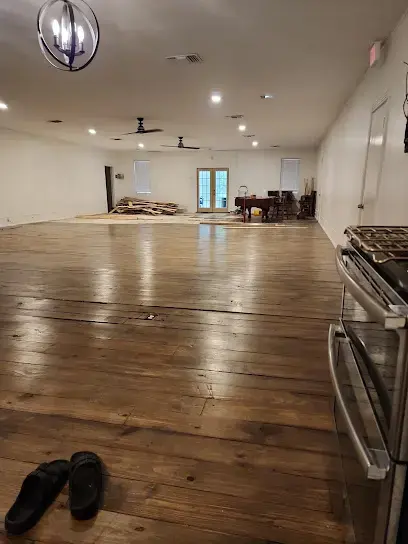
Wood and engineered planks are the most sensitive. They absorb water from below, then cup or buckle as they dry unevenly.
A quick check with a moisture meter tells the restoration team whether hardwood floor water damage can be dried with mats or whether boards must come up.
Plumbing repair and drying are two different jobs
A restoration team does not fix the pipe. A plumber does.
The restoration team handles the water that already escaped: extraction, drying, monitoring and documentation.
Homeowners usually want both done close together. Fixing the pipe without drying leaves wet materials behind, and drying without a repair lets the leak keep going.
More detail on the full process is on the slab leak water damage page, and the Little Elm water extraction page covers the first step when water is standing.
Questions
How can a Little Elm homeowner tell a slab leak from a roof or attic leak?
A slab leak shows up low: warm floors, wet baseboards, a musty room or a meter that moves with everything off. A roof or attic leak shows up high, as a ceiling stain.
Does the clay soil in Denton County cause slab leaks?
The clay swells after rain and shrinks in drought, and that movement stresses buried pipes. It is a factor, though not the only one, because pipe age and fittings matter too.
Should the water be shut off before calling for help?
Yes. Closing the main shutoff valve stops new water from entering the house while the plumber and the restoration team are lined up.
Will the slab have to be broken up?
Usually only a small section is opened to reach the pipe. The rest of the floor is dried in place with air movers, dehumidifiers and monitoring.
How long does a slab take to dry?
It varies with how long the leak ran and how thick the slab is. The restoration team logs moisture readings and keeps equipment running until the numbers stop falling.