Hail Over Little Elm: Roof Leaks, Wet Insulation and Ceiling Stains
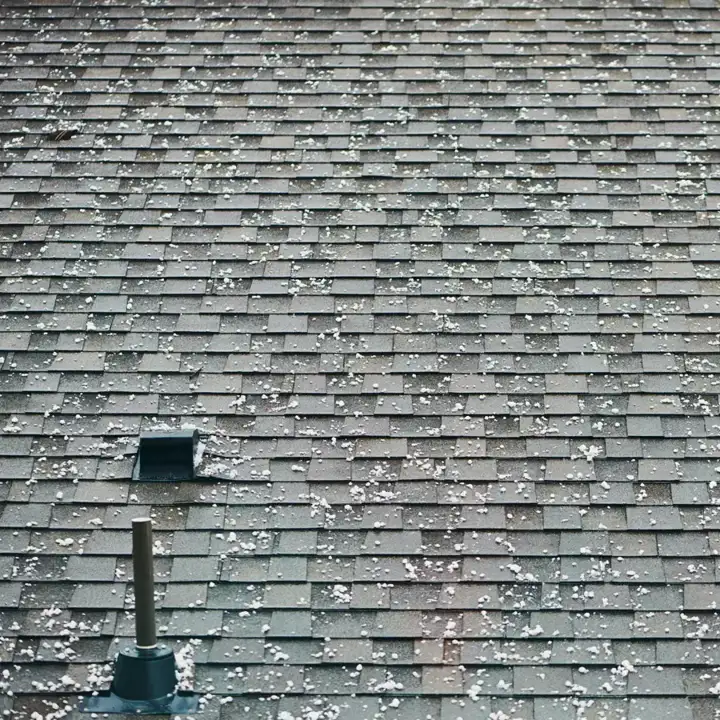
North Texas sits in one of the most hail prone corridors in the country, and Little Elm gets its share of spring and early summer storms.
Key takeaways
- Severe spring and early summer storms, with large hail and wind driven rain, are part of the Little Elm weather pattern.
- Hail does not always puncture a roof. Bruised shingles and loosened granules can let water in on the next storm.
- Water from a roof leak soaks attic insulation first and often shows up as a ceiling stain later.
- Tarping and roof repair stop new water, and the restoration team dries what already got wet.
- In Lake Dallas, about one inch hail was photographed across North Texas on May 22, 2024, which is a regional event, not a local count.
How hail turns into a leak
Hail rarely punches a clean hole through a modern roof. It bruises shingles, knocks off granules and cracks sealants around vents, flashing and ridge caps.
A roof in that state may look fine from the ground. The leak starts the next time wind driven rain finds the weak spot.
The storm pattern in Little Elm
Little Elm sees severe storms in spring and early summer, with large hail and wind driven rain. Flash flooding after heavy rain is also part of the picture, since the clay ground sheds water quickly.
That combination matters. Hail damages the roof, and the rain that follows it, sometimes days later, does the water damage.
Regional hail, not a local tally
In the Lake Dallas area, about one inch hail was photographed across North Texas on May 22, 2024. The photos show a regional storm, and they are not a count of Lake Dallas roofs.
The point is simple: hail reaches across the whole region, so a Little Elm homeowner should not wait for a neighbor to confirm damage.
Where the water goes
Water that gets under shingles runs along the roof deck and into the attic. Little Elm homes have air handlers and sometimes water heaters up there, along with supply pipes, so the attic is a busy space.
The first thing the water meets is insulation. Insulation holds a lot of water, and it sits directly on the ceiling drywall.
- Insulation mats down and loses its value when it gets wet.
- The ceiling drywall below absorbs water and begins to stain and sag.
- Water can follow framing and show up far from the roof damage.
- Wet attic materials stay damp for a long time without airflow.
What a homeowner can do right away
The goal in the first few hours is to keep more water out and to limit what is already inside.
Here is a workable order:
- Look at the ceilings for fresh stains, bulges or drips after each storm.
- Put buckets under active drips and move furniture and electronics out of the way.
- Turn off power to any room where water is near a light fixture.
- Photograph the roof from the ground and the stains inside, so the insurer sees the full picture.
- Call a roofer to tarp or repair the roof, and call the restoration team for drying.
What drying looks like
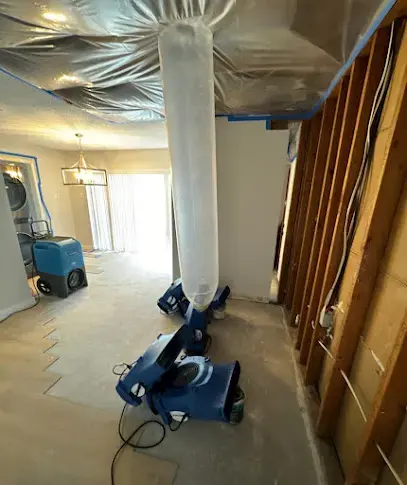
The restoration team starts by finding every wet spot with moisture meters and thermal imaging. Then it dries the attic and the ceiling together, since the two are connected.
Wet insulation is usually removed, because it will not dry in place. Framing is dried with air movers and dehumidifiers.
The ceiling below
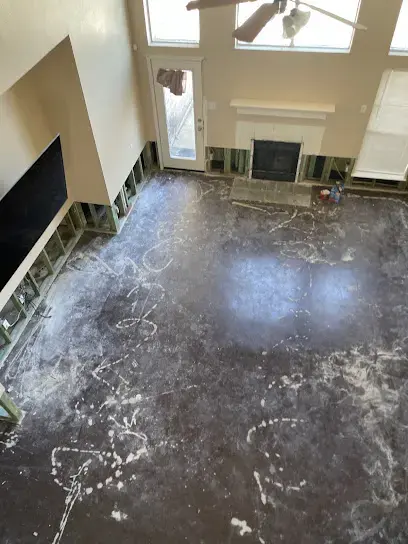
A small stain may be dried without tearing anything out. A sagging or soft section is cut away so the cavity can dry.
The ceiling leak water damage page explains how that decision is made.
Tarps and temporary fixes
A tarp keeps more rain out until the roof is repaired. It is a short term step, not a drying method.
Drying cannot finish while the roof is still open, so the repair and the drying should be lined up closely.
Watching for delayed damage
Hail damage does not always show up right away. A stain can appear weeks later, after a rain that finds a bruised spot.
A homeowner should check the attic after each hard storm, since a damp patch there is the earliest warning.
- Look for dark spots on the underside of the roof deck.
- Check insulation for matting or a damp feel.
- Watch ceiling corners and areas near vents for new discoloration.
Insurance and documentation
Hail claims depend on records. A homeowner who photographs the roof, the attic and the ceiling stains builds a stronger file than one who waits.
The restoration team adds moisture readings and a log of what was dried or removed, which shows how far the water went.
- Photograph the roof edges, vents and any granules in gutters.
- Date every photo and keep them in one folder.
- Save the roofer's estimate and any tarp invoice.
- Keep the restoration team's moisture log with the claim.
Checking the attic safely
Attics in Little Elm get very hot in summer, and the floor is often just framing and insulation. A quick look from the hatch, with a flashlight, is usually enough.
A homeowner should not walk across insulation, since it hides the joists and a misstep can go through the ceiling.
- Look for dark, wet patches on the underside of the roof deck.
- Check around vents, chimneys and the air handler for drips.
- Feel insulation near the edges for dampness.
- Skip the attic entirely if the ceiling below is already sagging.
Why speed matters after a storm
Wet attic materials do not dry in the heat the way a patio does. Without airflow, insulation and framing can stay damp for a long time.
That is why the restoration team treats a hail leak as a drying problem as well as a roof problem. The faster the water is out, the less of the ceiling has to be replaced.
Where to read more
The Little Elm hail and roof leak water damage page covers the full process for a roof leak.
Lake Dallas readers can use the Lake Dallas hail page, and the Lake Dallas hub lists the other services.
Questions
Can hail damage cause a leak without a visible hole?
Yes. Bruised shingles and cracked sealants can let wind driven rain in even when the roof looks intact from the ground.
Where does hail water show up first?
Usually in the attic insulation, then as a stain on the ceiling below. The stain can appear days or weeks after the storm.
Does the restoration team repair roofs?
No. A roofer repairs or tarps the roof. The restoration team dries the attic, insulation and ceiling that got wet.
Was there hail in Lake Dallas on May 22, 2024?
About one inch hail was photographed across North Texas that day. It was a regional event, and it is not confirmed as a Lake Dallas count.
Why remove wet insulation?
Wet insulation mats down and does not dry well in place. Leaving it holds water against the ceiling drywall.
Is it safe to go into the attic after a hail storm?
A look from the hatch is usually enough. A homeowner should not step on insulation, and should stay out if the ceiling below is sagging.