Attic AC Overflow in Little Elm: A Stained Ceiling After a Hot Week
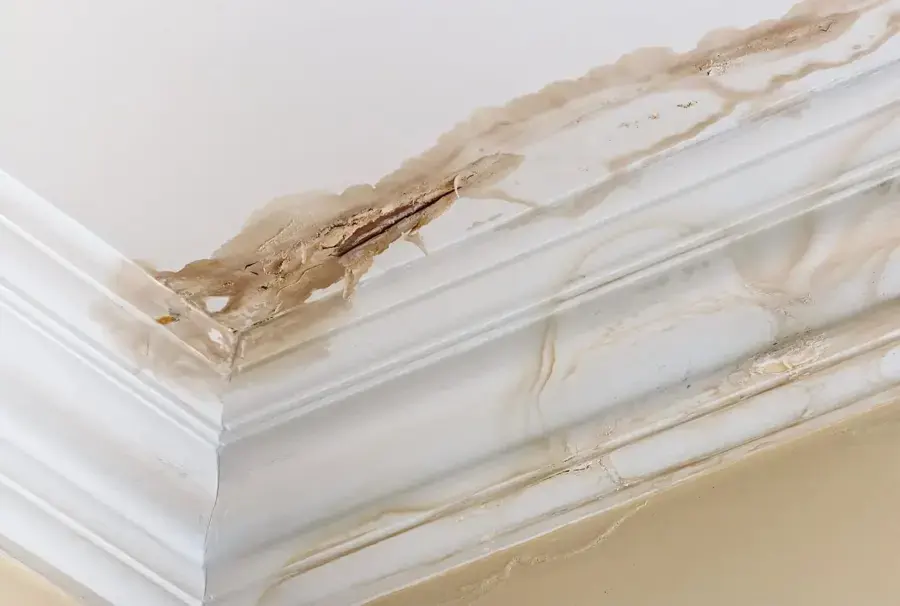
In Little Elm, summer brings the same call every year: a brown stain on a ceiling, and an air conditioner running in the attic above it.
Key takeaways
- Many Little Elm homes have the air handler in the attic, so a clogged condensate drain or a full pan puts water straight above a ceiling.
- An air conditioner pulls water out of humid air, and that water must leave through a drain or the pan overflows.
- A ceiling stain from AC water often shows up after a hot spell, not on the first day of the clog.
- Switching off the AC stops new water, while the ceiling and attic insulation still have to be dried.
- A restoration team dries the damage. An HVAC technician clears the drain and repairs the unit.
Why the air handler overflows in summer
Little Elm homes were mostly built in the late 1990s, 2000s and 2010s, and the air handler often sits in the attic. North Texas summers keep air conditioners running hard.
Cooling air removes moisture from humid air. That moisture, called condensate, collects in a pan under the coil and drains out through a small pipe.
When that drain clogs, the pan fills. When the pan fills, water spills over and soaks whatever sits beneath it.
Why attics make it worse
An attic air handler sits above the ceiling drywall. A pan that overflows does not drip onto a floor where it can be seen.
The water runs into insulation and drywall first, and a stain does not appear until the material is soaked.
The same pattern in The Colony
The Colony sees the same summer pattern. A clogged condensate drain or a full drain pan can leak into a ceiling or an attic wherever the air handler is mounted.
The cause is regional heat and humidity, not one neighborhood.
Signs the AC is the source
Ceiling stains have several causes, including roof leaks and plumbing pipes in the attic. A few clues point to the air conditioner.
- The stain is brown, spreading and sits below the air handler or along the drain path.
- It grows during hot, humid days and slows in cooler weather.
- There is a musty smell near the closet or hallway where the air handler is housed.
- Water drips from the ceiling when the system is running and stops when it is off.
- The AC shuts off on its own, since many units have a safety switch that trips when the pan is full.
How an AC leak looks in stages
A ceiling does not fail all at once. The damage moves through stages, and each one is a chance to act.
Knowing the stage helps a homeowner explain the problem and helps the restoration team judge how much is wet.
Early stage
A faint tan or brown ring appears, often near an air register or the closet where the air handler sits.
The drywall is damp but still firm. Drying in place is a realistic option at this point.
Middle stage
Paint bubbles, the ring spreads and the surface feels soft. Insulation above is usually soaked.
The attic needs attention as well as the ceiling, since the water source and the wet insulation are both up there.
Late stage
The ceiling sags or drips steadily. Drywall that has sagged is weak and heavy with water, and it is cut out so it does not fall.
Repair after drying is bigger at this stage, which is why catching a clog early pays off.
What to do right away
The first step is to stop the water. A few minutes of action keep a small stain from becoming a collapsed ceiling.
Here is the order that works in most homes:
- Switch the AC off at the thermostat, and at the breaker if water is dripping near light fixtures.
- Place a bucket under any active drip, and move furniture away from the stained area.
- Pierce a sagging section only if a bulge is holding water, and let the water drain into a container.
- Photograph the stain, the drip and the air handler pan if it can be reached safely.
- Call an HVAC technician to clear the drain, and call the restoration team to dry the ceiling and attic.
What the restoration team dries
AC water is usually clean at first, but it does not stay clean. Dust in the attic and slow soaking turn it into a mess that grows quickly if materials stay wet.
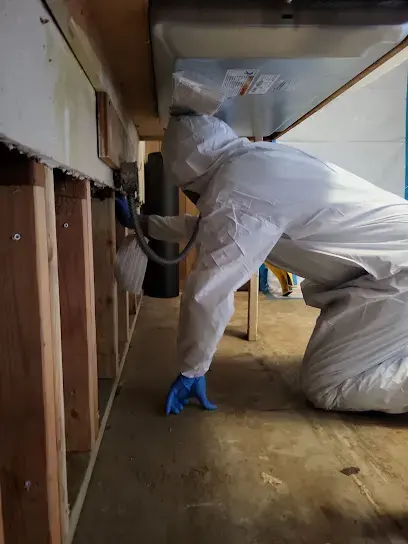
The restoration team traces the water path with moisture meters and thermal imaging, then dries the affected area.
Attic insulation and framing
Wet insulation does not dry well on its own. It mats down and holds water against the ceiling.
Where it is soaked, it is removed.
Framing and the top of the ceiling drywall are checked and dried with air movers and dehumidifiers.
Ceiling drywall
A small stain can often be dried in place. A sagging or soft section is cut out so the cavity can dry.
The ceiling leak water damage page explains how the restoration team decides between drying and removal.
Preventing a repeat
AC overflow often repeats until the cause is fixed. The drain gets clogged by algae and debris, and the pan can rust through on older units.
A homeowner can lower the odds with a few habits.
- Ask the HVAC technician to flush the condensate drain at the start of each cooling season.
- Install a float switch that shuts the unit off when the pan fills, if the unit does not already have one.
- Check the secondary drain pan under the air handler for standing water.
- Replace filters on schedule so the coil stays clean and ices up less.

When a Little Elm homeowner can wait and when not
A small drip with the AC off for an afternoon is manageable. A spreading stain, a sagging ceiling or water near a light fixture is not.
Hot weeks make the wait costly. The AC is needed, but running it with a blocked drain keeps feeding the same pan.
The better path is a short, planned shutdown while the drain is cleared and the wet material is dried.
Where to read more
The Little Elm AC condensate leak water damage page covers what is dried and what is removed in detail.
Readers in The Colony can use the Colony AC condensate page, and the The Colony hub lists the other services.
Questions
Why does the stain show up weeks after the clog?
Insulation and drywall absorb a lot of water before the surface shows anything. The stain appears when the material is already soaked.
Should the air conditioner be turned off?
Yes, at the thermostat. That stops new condensate while the drain is cleared and the damage is assessed.
Who fixes the clogged drain?
An HVAC technician clears the drain and checks the unit. The restoration team handles the wet ceiling, insulation and framing.
Is AC water the same as a plumbing leak?
It starts as clean water, but attic dust and time change that. Wet materials are dried quickly so they do not turn into a bigger problem.
Can the ceiling be saved?
Often, yes, when the stain is small and caught early. Sagging or soft drywall is cut out so the cavity can dry.
What if the air conditioner is needed during a heat wave?
Running it with a blocked drain feeds the leak. A short shutdown to clear the drain and dry the wet material is safer for the house, and the restoration team can work around the repair.